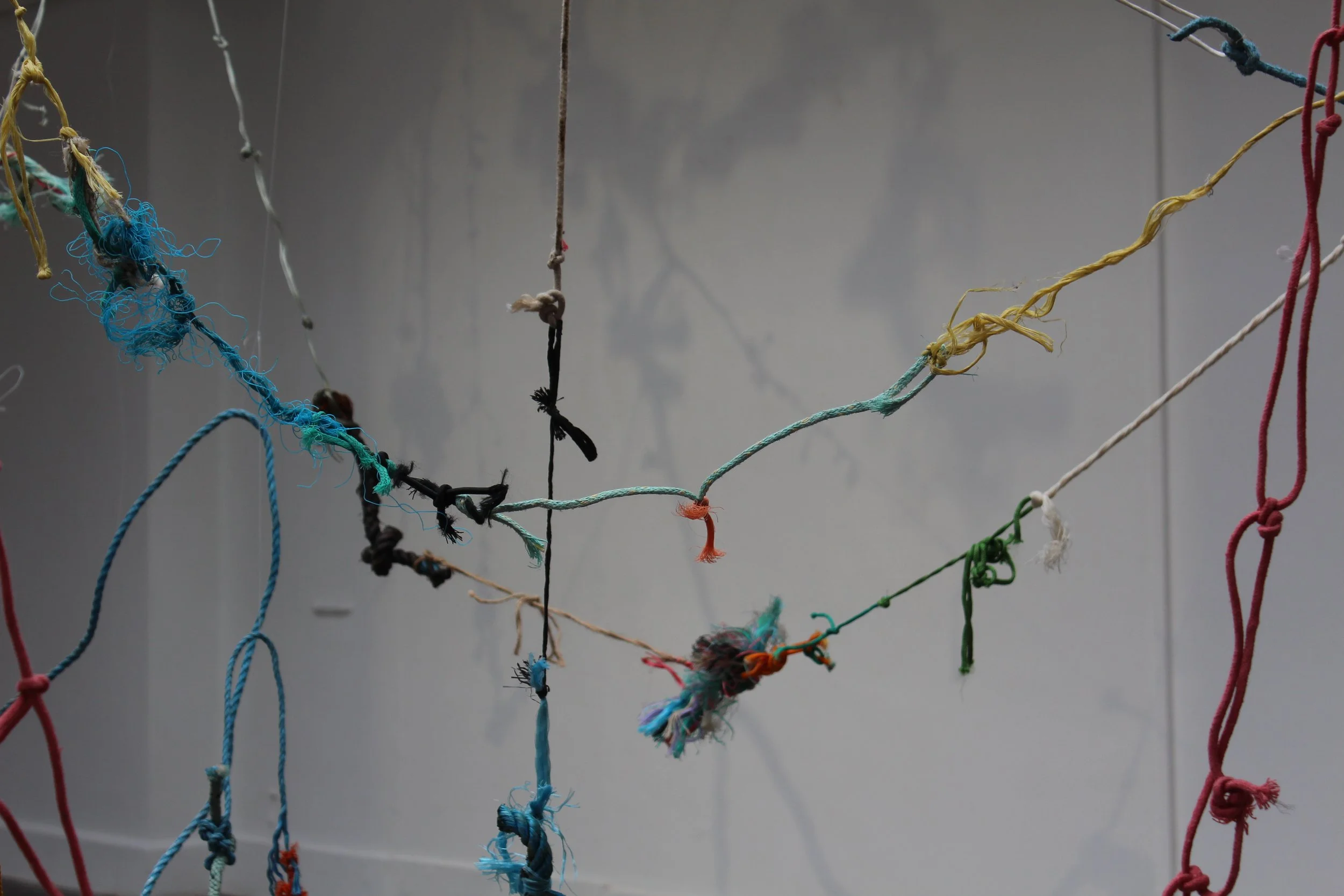
Found knots looped in 85m rope, projection, Aeolian harps Size variable
This work is being tested in the project space of Surface Gallery (thank you!). The size will always be variable. This space has windows at either end and my intentions are to create a aeolian harps for the two opposite middle windows using used instrument strings. This will create enough draught to make continual movement, allow everyday sound to float into the space which I feel is important as the knots were part of everyday working life and the sounds will complement the installation. However, as this is work in progress, it all might change.
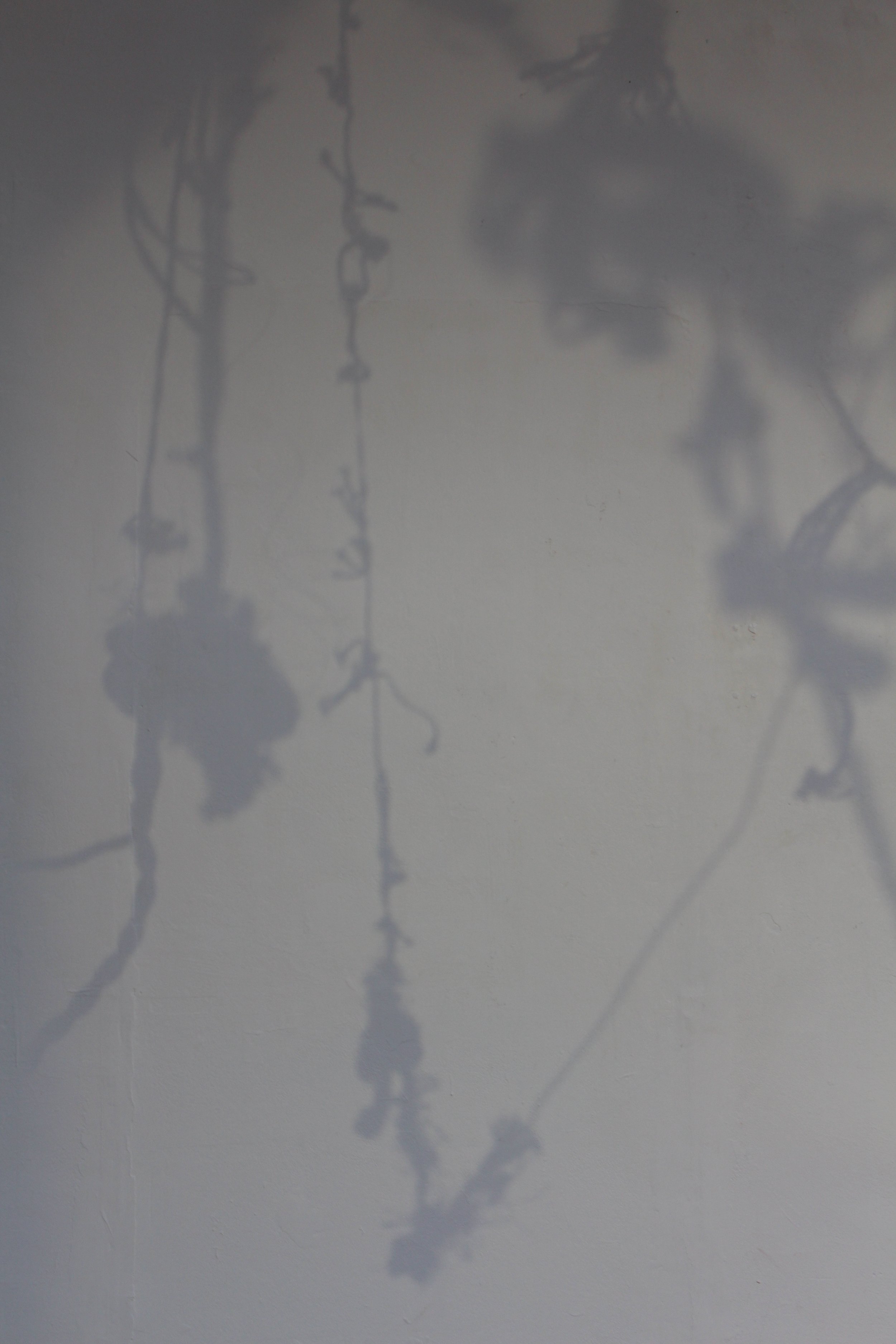
Shadows from installation
The Ties that Bind Chris Wright
The rope shivers in the draught, its weight causing sags almost to the floor and loose ends skim the floor, barely touching. Knots escape knots and strands of rope tumble free of their braiding. They twist and turn and get caught in other knots. Segments of nets are partners of parcel knots, lorry ties grasp boaters’ knots, lengths of polypropylene rope grab a fragile piece of natural string to create this giant looping, futile installation. Its outline projected onto the white walls where it appears as tree branches laden with blossom, a cherry tree perhaps, the colours of the rope now just grey. They are accompanied by strange sounds created by the wind skimming the strings of Aeolian harps.
The Ties that Bind uses gathered knots discarded by fishermen (deliberate use of men here due to the tradition of women not being allowed on boats due to supposedly bringing bad luck), lorry drivers, farmers, parcel tiers, motorists, craftspeople, kite flyers, walkers (the physical creation of lines and routes) amongst others. This includes decorative techniques such as Chinese knotting and Japanese kumihino; games such as cat’s cradle as well as medical uses such as sutures for closing wounds. Magick knots were used to assist in bringing intentions to fruition. A knot in a handkerchief is an aide memoire whilst quipus are a South American way of measuring and remembering. As objects in themselves, they are simply the joining of two or more fibres of varying sorts to create a bond that has a purpose. They can also just be a knot formed on a rope to stop it slipping but probably, just a knot that has escaped its partner. As an aesthetic object, their intricacy is governed by the time they have spent away from their original purpose so perhaps frayed or dirty or unravelling threads intertwining.
The knots used here have been collected over many years and come from my practice of walking, or, more often, meandering in different places and poking into nooks and crannies where discarded pieces of rope have been pushed or blown or uncovering them in piles of detritus especially on a beach. They were lost, or discarded, no longer needed, dispensable, or maybe untieable so cut off. They represent lost skills where cable ties can do the job quicker and more easily.
The Ties that Bind re-creates a rope, or technically, a link, by re-tying the knots into a continuous loop, no ending and no beginning, that is now 85 metres long (and growing). The knots are haphazard, often unconventional, using the maybe tiny ends of tiny knots to make a hold on another piece. Some, however, are legitimate reef knots, round hitches, clove hitches, figure of eights, overhand and granny knots. It makes the rope vulnerable, fragile and unstable with different diameters jostling together. Colours clash and loose ends escape. Each section of the rope is discrete, not touching another part of the installation except when the installation moves either through draughts or touch. Its physicality belying its fragility and is a removal from the original usefulness of a knot. Here, they do nothing but create a useless rope. The installation both invites and repels entry and the viewer is asked to re-tie any knots that loosen due to their presence.
Installing the rope in a space near windows or doors creates draught and the rope trembles in the slightest breeze. This is enhanced through the use of projectors or another intense light source which opens up the walls to its shadows and reflects the movement of the rope.
In the depths of the window or near a door, Aeolian harps play strange sounds in the breeze, strangely both in and out of sync with the sway of the rope. It comes unexpectedly while the opening brings in sounds of the everyday. Drawing the two pieces together, the rope and the harps, alludes to Aeolus giving Odysseus a bag full of all the winds tied up with a thread to help him on his journey and to wind knots that were used by sailors to try and encourage the right strength of wind to fill their boats sails. The sound is an intermittent, discordant sound dependant on the local environment that brings in the notion of waiting, waiting for the wind, to set sail, or to create sound. The harps themselves are made from used/scrap objects with new strings and hitch pins. The sound is unstructured, the strings untuned and random akin to the rope installation itself. It is a deliberate act of resistance to learned musical forms.
The threads from which the rope hangs are created from longer sections of found synthetic twine that has been untwisted into small groups of strands. This action of unravelling was performative, similar to my close observation of spiders building webs, in both the movement and act of untwisting. This aligns closely with my practice of walking both as art itself and as a gathering of knowledge, experience and treasures, such as feathers, stones, lost notes and knots. Walking is inherent in this work and is also associated with my ethos of a particular environmental responsibility and a sustainability within my practice.
Thinking of the knots as ‘wild knots’, that is, they are released from their original purpose and place, the sound created by the wind is similarly ‘wild’, created freely and unpurposed.