Many peregrinations through the same small space
It is the end of March and I am wandering around, through and in a patch of land by the edge of the River Soar in the East Midlands, UK which I take care of, looking, hearing, sensing, smelling and tasting, especially the water mint. It is not a garden although food plants are grown in containers placed high up to fool the rabbits. Some of the wild plants are edible, think nettle soup, bubble and squeak with nettles instead of cabbage, water mint tea and dandelion salad. It is measured using feets, my unit of measurement where one feets is the length of my clumpy, waterproof shoes. The patch is 62 feets and, variably, by 41 feets. It is an ecotone, sometimes land, sometimes water. When it is wet, it is very, very wet and needs more than waterproof shoes to cross it.
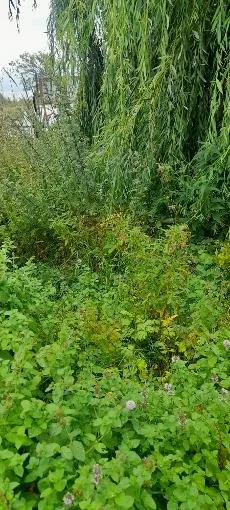
So much growth in such a short time
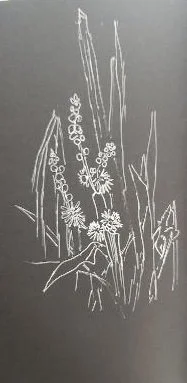
Pen drawing made throughout the season
April
Today, I am walking slowly, each step risks flattening one of the many seedlings that have sprung up due to the increase in light. The three willow trees that dominate the patch were pollarded last year removing their, and my, umbrella of shade and rain protection. It has rained now and the earth smells good. Under the trees, though, the earth is still dry and cracked. Insects climb in and out of the cracks – ants and little beetles mostly. I move a twig with my toe and a centipede tries to find somewhere new to hide. I move the twig back to its original place. Moving so slowly and quietly in this tiny area exposes the amount of life in such a small space and makes me think of the ecological damage being done elsewhere, when, here, it is abundant in living things. Cultivating the wild seems to be a good phrase to describe what I am doing here.
The floods which happen several times a year bring with them ‘delights’ such as Himalayan Balsam and the orange variety which I remove due to their explosive seeding habits. Later, there will be an immense growth of pennywort in the water which chokes the oxygen in the water. Yesterday, there was a small oil spill which has driven away the shags which were catching fish. Hopefully, I will see them back soon.
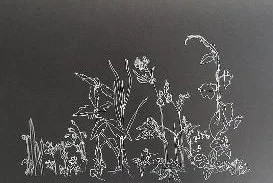
Walking alongside the river
Focusing on the microscopic, there is so much to learn. I am beginning to understand how the plants grow and are in tune with the passing of time throughout the season. One plant grows as another is at the end of its cycle. All is here if we care to look properly. The birds begin earlier each day and leave the traffic sound behind as that comes later. Walking is so much more than putting one foot in front of another. I take many pauses, to look and listen.
I try walking in thick socks, feeling the ground beneath my feet. Each shuffling step reveals a new sensation. Afterwards, I find that I have gathered seeds of all kinds. They cling to the fabric and don’t release easily. I am like a sheep carrying the seeds to new places in my fleece.
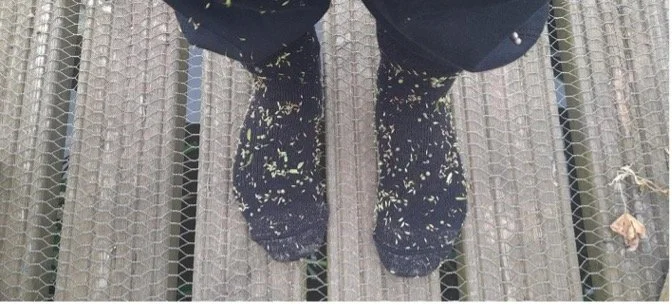
Socks with added friends
I plant the socks in rough compost.
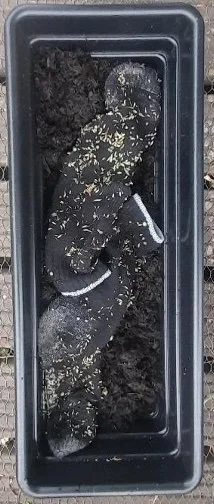
Socks, planted
May
Now everything is growing profusely and through plotting and drawing, I begin counting and naming species – creeping buttercup, creeping nettles, dock, water dock, dandelion, celandine, ground ivy, ground elder, elder, sycamore, willow, giant willowherb, figwort, evening primrose, garlic mustard (another one for eating), white dead nettle, reed mace or bulrush that is slowly shedding its seeds, reeds, moss, bracket fungus, wood avens alongside ants, gnats, earthworms, centipedes and, at this moment, one blue tit. A great spotted woodpecker was here this morning with chaffinches, moorhens and mallards. I can hear other birds in a nearby wood as well as traffic nearby.
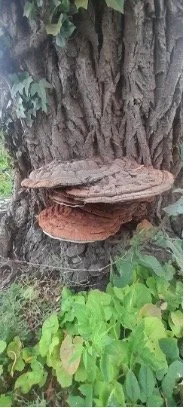
I was originally thinking that bracket fungus grow slowly but there have been many changes with one falling off and others appearing
I start to document them on tracing paper adding insects and animals to a second layer. They will be a continuous document of the patch, I hope. I didn’t realise that tracing paper is so hard to photograph!
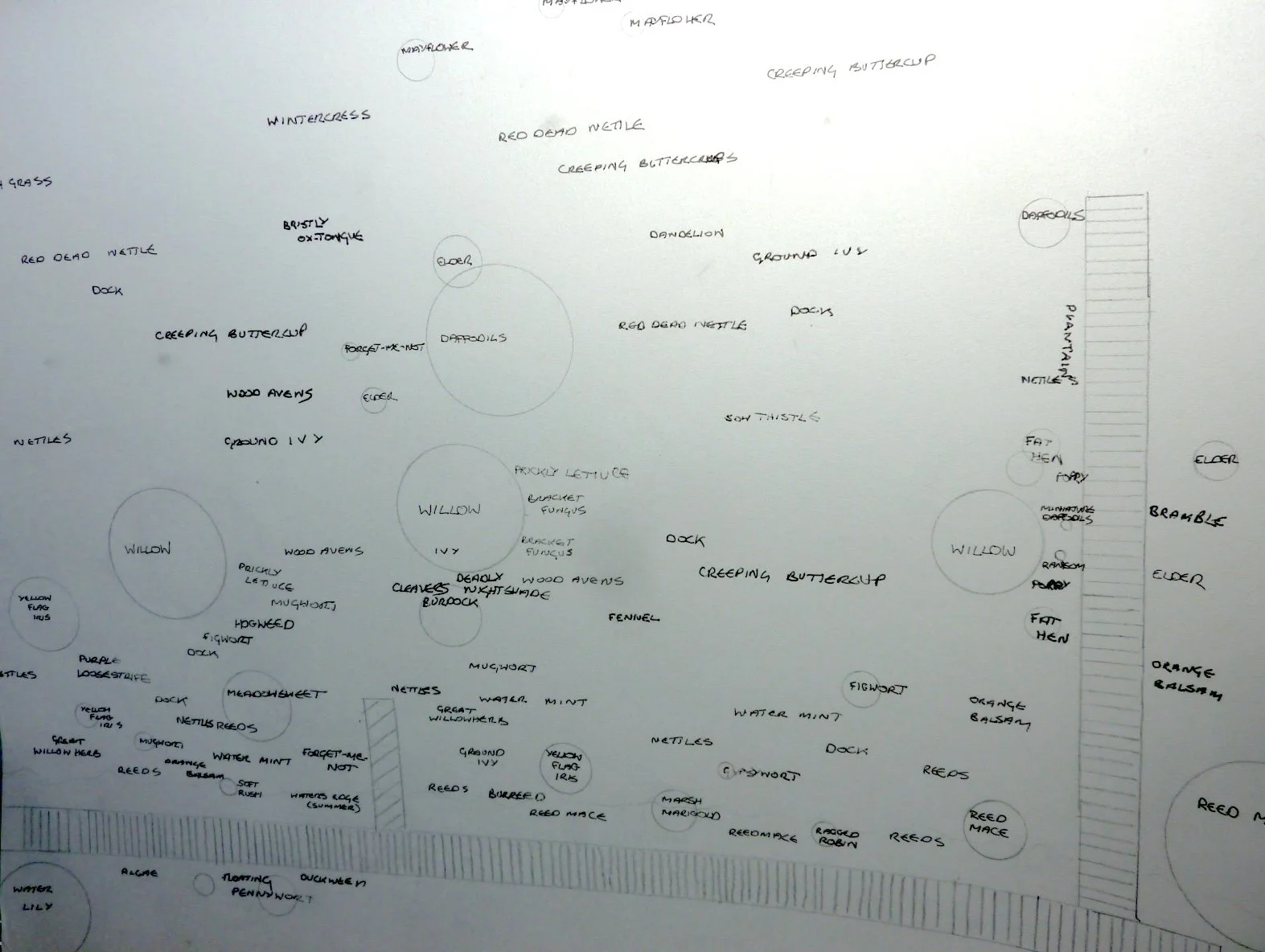
Plan of plot
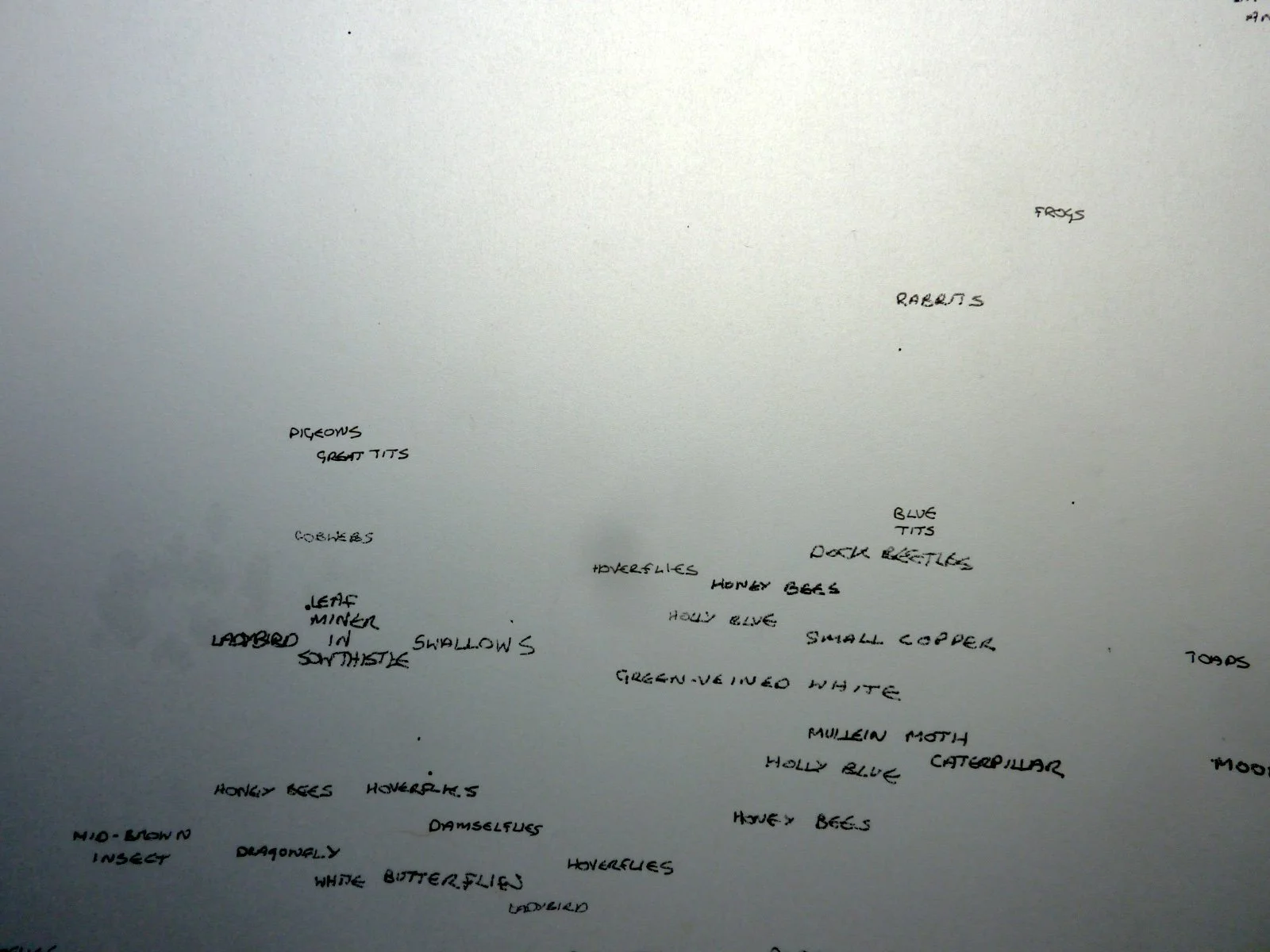
Insects, birds, animals
June
A month of constant change. I meander daily getting stung by nettles, watching bees and hoverflies on the watermint and loosestrife flowers particularly. Swallows are very active in the early evening when the tiny fish begin coming to the surface for flies. A continuous pageant of survival.
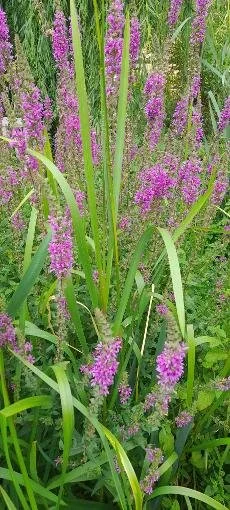
Th beauty of loosestrife
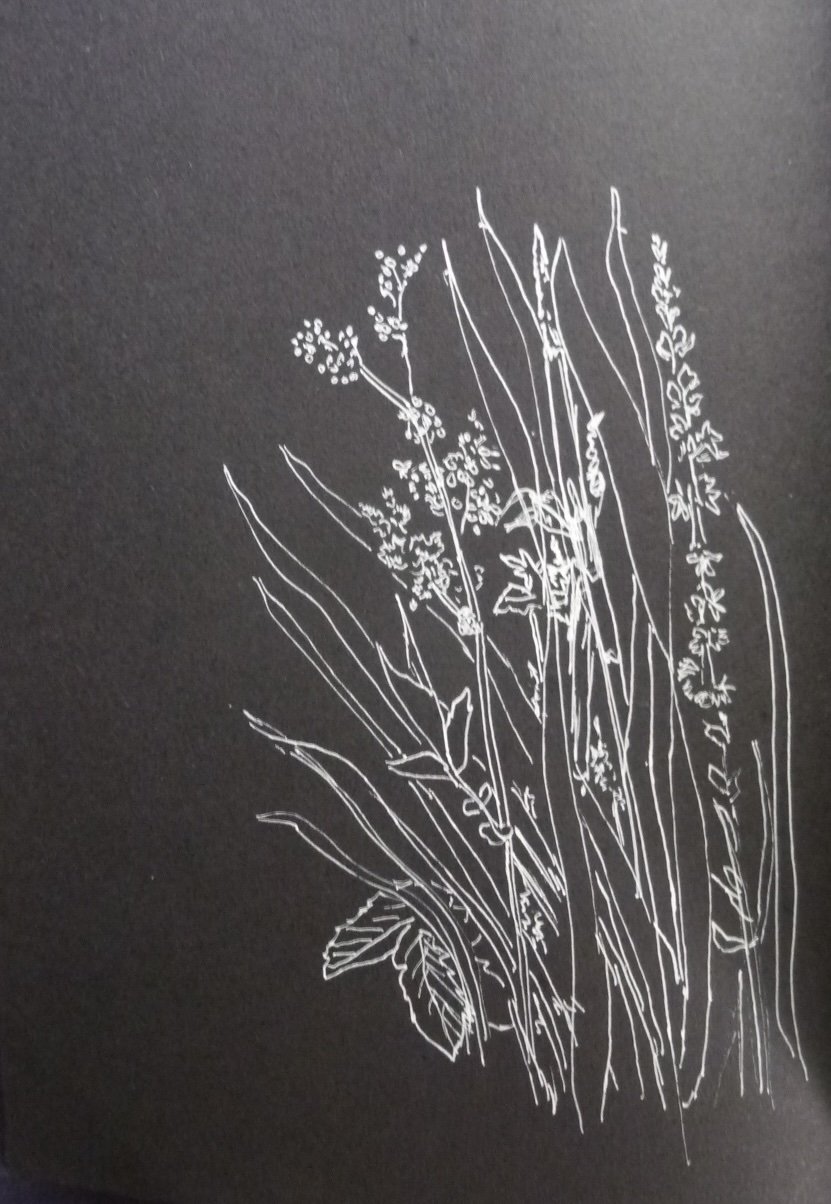
A tangle
My drawings are becoming crowded in places and I am wearing little paths through the plants. The meadowsweet adds it scent to the air. I am reminded of the old traditions of using plants for domestic purposes, rituals and medicines. I think about the colours now, a riot of colour, as they say. The year began with yellow flowers, now it is more pink and white. I add a third page to my drawings that focuses on colour.
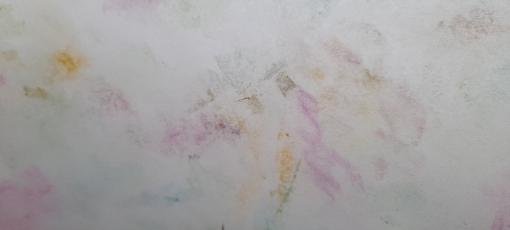
Sensory drawing
July
Things have now changed completely. The ground is crisp underfoot and crunches like the snap of a gingernut biscuit. The branches of the willow have grown long enough to tangle in your hair and face. The meadowsweet flowers are browning and becoming seedheads. The prickly lettuce is taller than me. Some parts are impenetrable especially the bindweed that is grasping onto the giant willowherb, the white flowers uncurling in the morning with the sun and retreating at dusk.
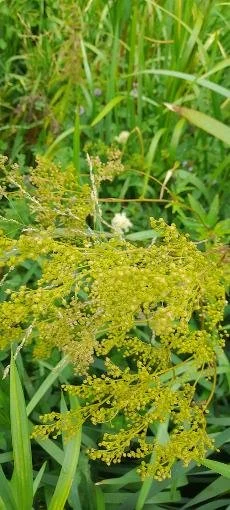
The end of the meadowsweet
New drawings are made of the three distinct layers of plant growth from a middle perspective.
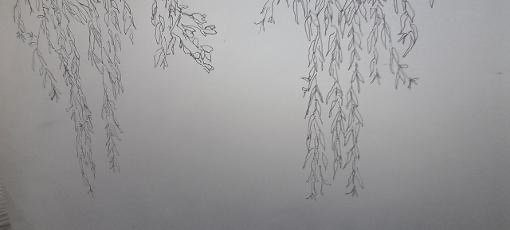
Willow branches
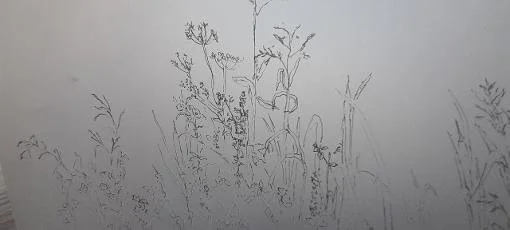
The middle entanglement
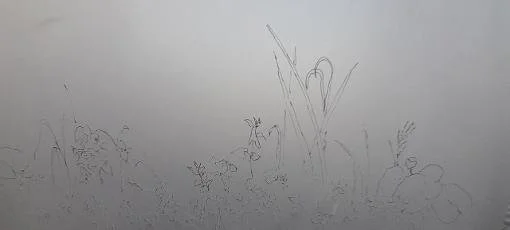
Water and lower plants
When placed together, it gives an overall picture of what I can see in the space of a few steps sideways along the edge of the patch but also adds a little depth. You don’t see everything at once.
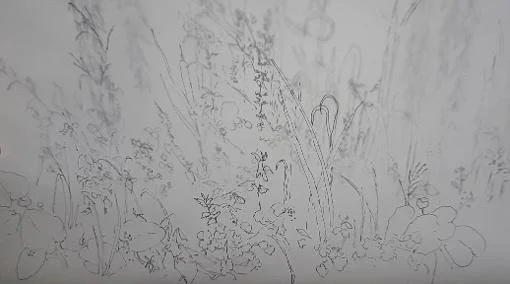
All layers of drawing
I continue my wanderings and wonderings and create a new page of ‘events’.
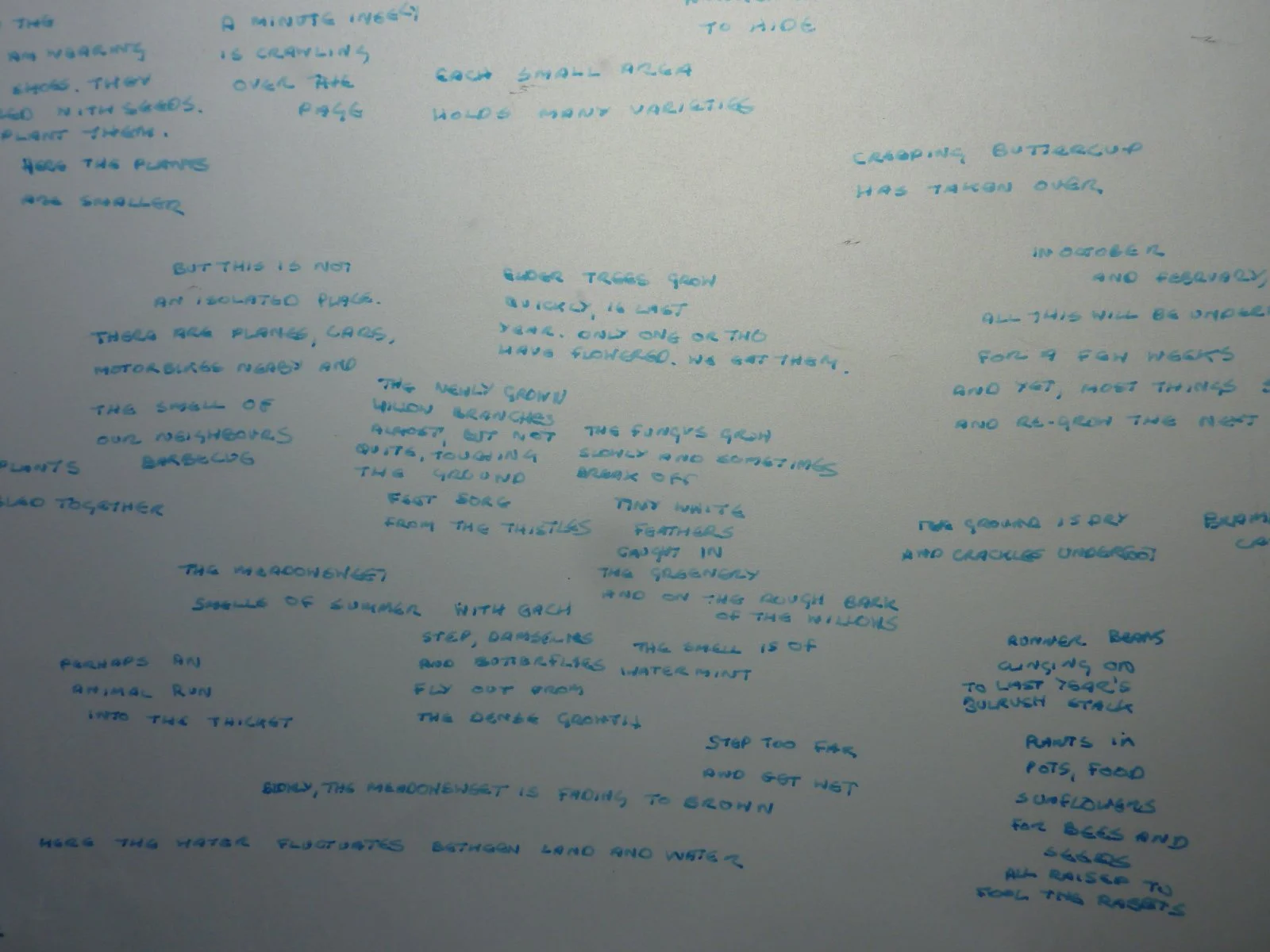
Wandering around, there are many sensations from bites to sweet odours
It notes the biting ants, the hole in the tree that a rabbit has made a home in, the places made for frogs and toads by the fence, the branch where the pigeons gather and make a lot of noise, the sudden profusion of bulrushes and where plants such as yellow iris have died back to be overtaken by something else until next year when the cycle will begin again. Gulls have arrived to accompany the terns that are here most of the year.
The layers of drawing are put in order to be viewed as a whole, each overlapping the other representing change, movement and exchange.
The ‘book’
And the socks, they have begun sprouting and showing very tiny seedlings.