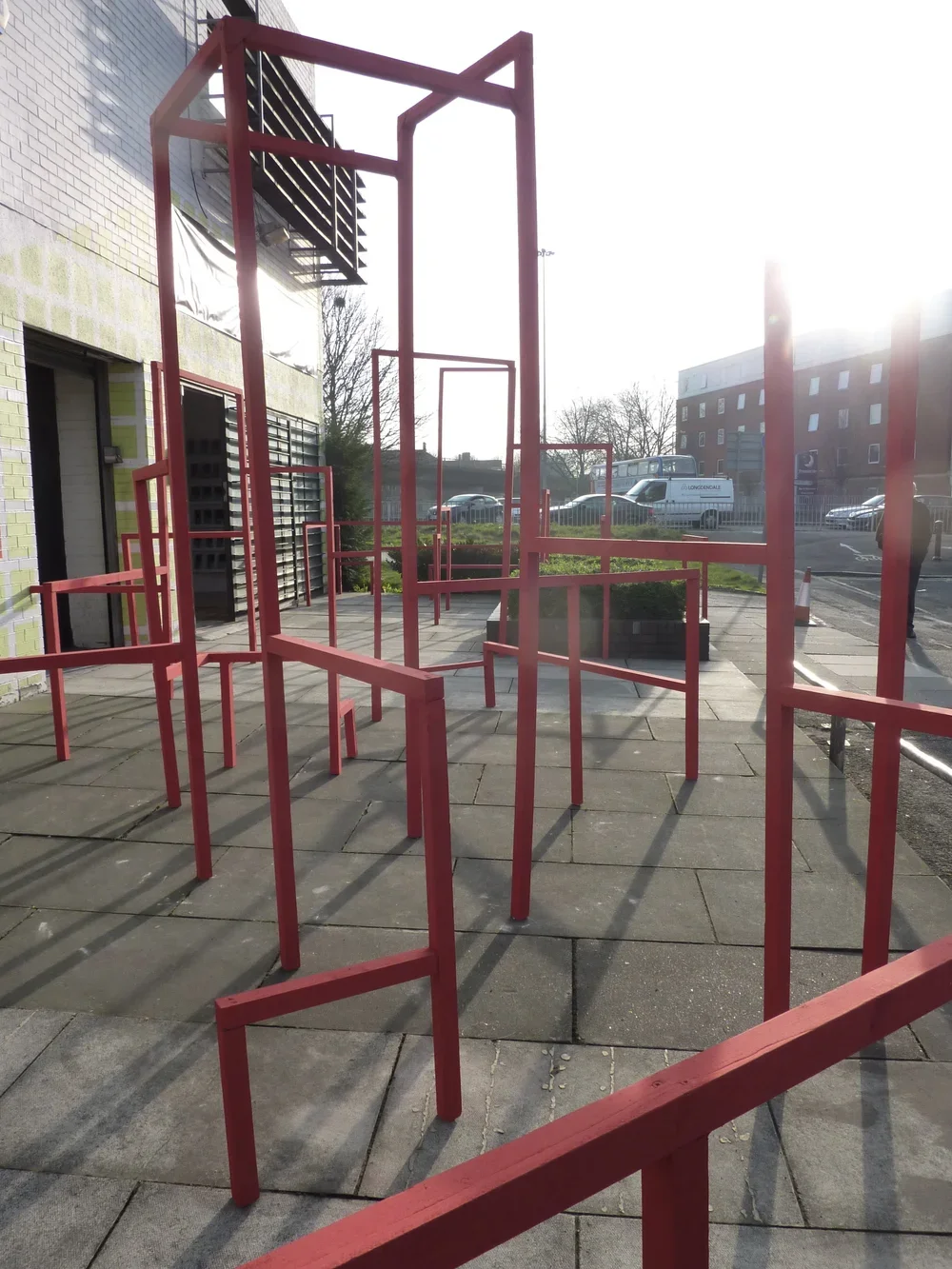
Detail - Grass is Greener (on the other side) Blank Media Gallery, Manchester
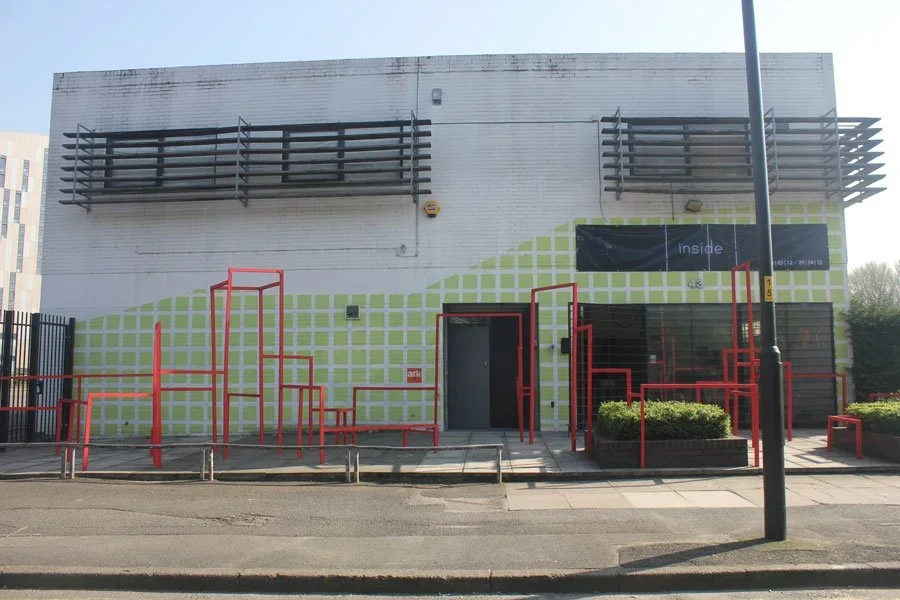
Grass is Greener (on the other side) Blank Media Gallery, Manchester
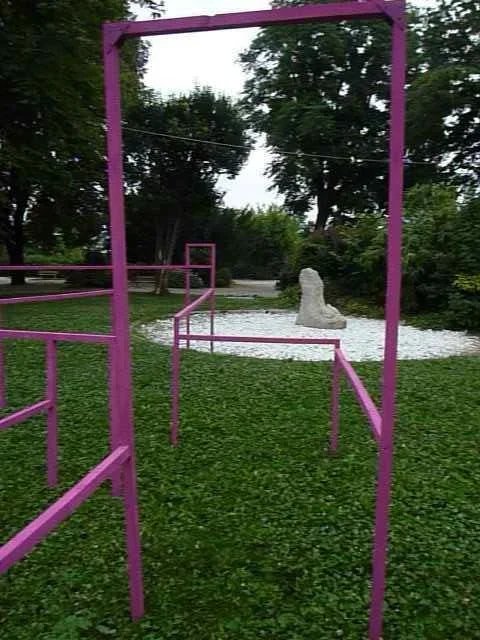
Cuneo, Italy - in the penguin pool of the defunct zoo 2009
Grass is Greener utilises the language of the non-place explored through the language of the maze. The installation is constructed as one piece, each part dependent on another for stability, attached together to form a rambling arrangement of space and place. Each element can be entered or viewed from another part. However, place is only experiential, it reminds the viewer of town planning, architectural drawings, as well as places they have visited. For example, the enclosed and private London gardens that exist only for a privileged few, and narrow alleys seen in cities that appear to disappear into nowhere, accessible from a previous era and city structure and it is this concept of nowhere that leads this work.
The work creates both significance and insignificance within the gallery space; its open structure hardly disturbs existing viewpoints. It sits in the space, neither aligned neatly diagonally or up and down, its axis skewed, the four large ‘arches’[1] representative of points of compass but placed randomly not coinciding with the geographical reference points or the location of those points to equally spaced corners. It pertains to absence, it perceives a lack and a sense of what it is not and what it cannot be. It cannot be called liminal or sublime but it does have a suggestion that relates it to existing structures and ‘beyond’, beyond existing structures, beyond the experience of other architectural installations, both mentally and physically. It promises a journey but it can’t fulfill that promise. The viewer chooses the level of complicity but then collaborates to be implicit in its deception.
When the installation is entered everything changes. The outlook is then one of obstructions and disturbances. The posts and rails are reminiscent of border posts, state entry and exit points. The head-height barriers and low bars could belong to a children’s playground. Referencing play is not new, however, in this work it is not an intentional reference. It is created by the duality of the structure as much as by the colour. The scarlet colour is an identical shade to that used in the local pallet-makers identification marks placing the work in the industrial, commercial world rather than one that indicates play. This twin dichotomy of industry and play creates an ambiguity, a sense that it doesn’t quite belong anywhere, that it has no use for industry or play. It could also be said to belong firmly in the art world as its form and aesthetics situate it within the formal sculptural tradition.
Sacha Craddock[2] discussed moments and the relationship of memory to how we decide whether we like, for example, a painting. She believes that imagery comes first, then understanding and then anecdotal meaning. Grass uses these three points, imagery, understanding, anecdote only when it is viewed from within otherwise it is purely anecdotal, (if that is the right word for relational understanding – memory taking the place of experience).
How this work is viewed and how it is experienced are two different states. It could be called ‘near and far’ as referenced by Bachelard. He states ‘It would seem, then, through their “immensity”[3] that these two kinds of space – the space of intimacy and world space – blend.’ (203:1994). Grass is Greener therefore uses the notion of intimate space where world space is the imaginative world that has no boundaries.
Is place not just experience and memory but also a representation of experience and memory? Perhaps non-place is a kind of anti-place, not an aggressive negative, but representative of experience and memory and also absence of the presence of experience and memory. Thinking of absence as opposite to presence with presence the perception of something ‘that should be there’ so absence as something that isn’t there therefore a concrete thing? Does presence imply absence and vice versa? This installation uses the concept of absence as a tool for negotiating the space, it relies on ideas of absence of place and representations of place.
The concept of absence, not here, nowhere, or by relation, anywhere, takes the in-between space. Uses of the words anywhere, somewhere, elsewhere and nowhere employ absence and, by relation, presence. They also imply place and an in-between space between the mental and physical notion of any of these words. Derrida in Différance uses the in-between space between the heard and the seen, the written. He states ‘One can only expose that which at a certain moment can become present, manifest, that which is shown, presented as something present, a being-present in its truth, in the truth of a present or presence of the present’ (5:1982)[4].
The boundaries of the installation and the boundaries created within the work are borders. The border posts in the image below have a relation to this work. The openness, emptiness and control exercised by the railings are not dissimilar to Grass is Greener.
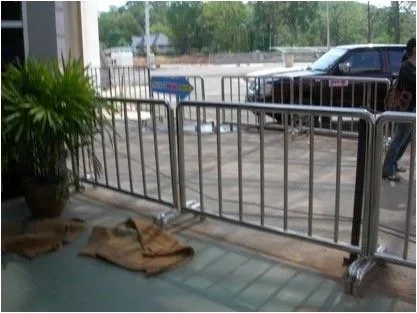
Border post between Laos and Thailand 2009
The narrow railings in this border area dissect open space creating territories within territories. The ‘new’ territory not only separates the countries but also forms a new area between the two countries. It is a territory that concerns absence and thus relates to ideas of non-place. Whilst non-place is not specifically about absence, it concerns the absence of identity especially individual identity. However non-place’s position as the backdrop for everyday life adds the dimension that narrates the transition within the non-place. In Grass is Greener, the installation creates a multiplicity of territories, a profusion of non-places[5] within itself whilst the open space of the gallery, a disused warehouse, itself a non-place situated in the non-place of a trading estate, could be seen as becoming place, it becomes the country. The warehouse itself is on an industrial trading estate, its buildings and roadways built especially for purpose.